ERP for the pharmaceutical and cosmetics industry
Batch traceability, finished-product release, FEFO and expiry: the ERP for cosmetics and para-pharmacy, where the data carries accountability.

Pharmaceuticals & cosmetics
- Batch traceability and final inspection
- Statuses, blocking and release
- Expiry and FEFO
Release before issue
On a site operating under GMP, a manufactured product is not an available product. It stays in quarantine until the release decision, taken on the strength of a complete batch record and signed by a named responsible person.
The whole information system has to follow this logic of statuses. An ERP that makes stock available as soon as production is declared organises, structurally, the issue of unreleased batches.
The batch record itself often stays on paper: several dozen pages per batch, read line by line before release. It is the main delay between the end of manufacture and availability, and the main source of documentary discrepancies at inspection.


Expiry, calibration and data integrity
Date control is a fundamental constraint: issue nearest to expiry (FEFO), blocking the issue of an expired batch. Issuing on FIFO instead of FEFO is paid for in destroyed stock.
Weighing and measuring instruments must be calibrated, with a due date that is monitored. In cosmetics, ISO 22716 sets comparable requirements.
AVIA ERP follows batches with their quarantine and blocked statuses, proposes batches in FEFO order on issue, blocks the issue of an expired batch, records the release decision of the finished product with its author and date, and logs every intervention in a chained audit log. Holding the finished product in quarantine applies only in Block mode; by default the final inspection is created and the discrepancy is only logged.
Cosmetics and para-pharmacy on screen
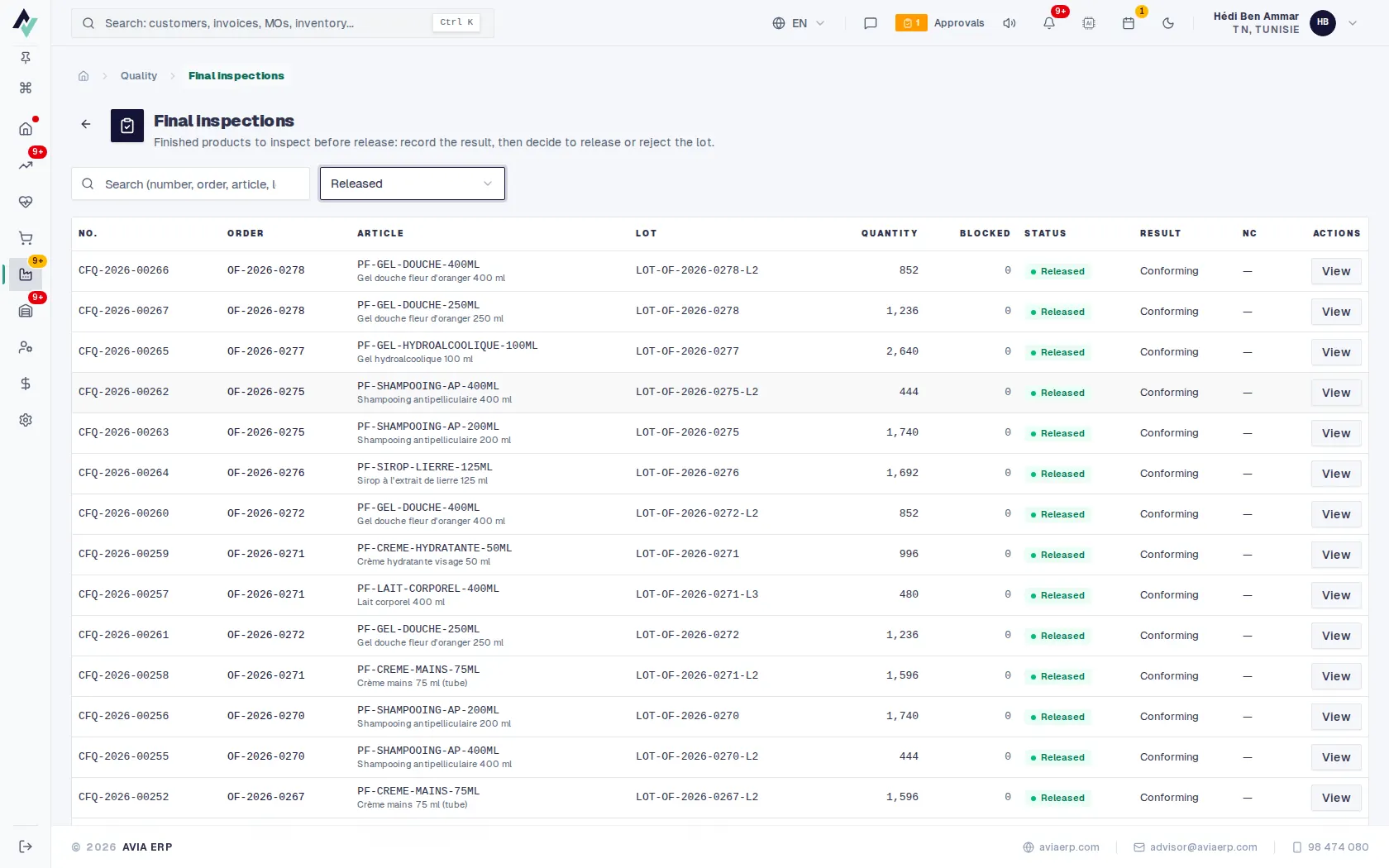
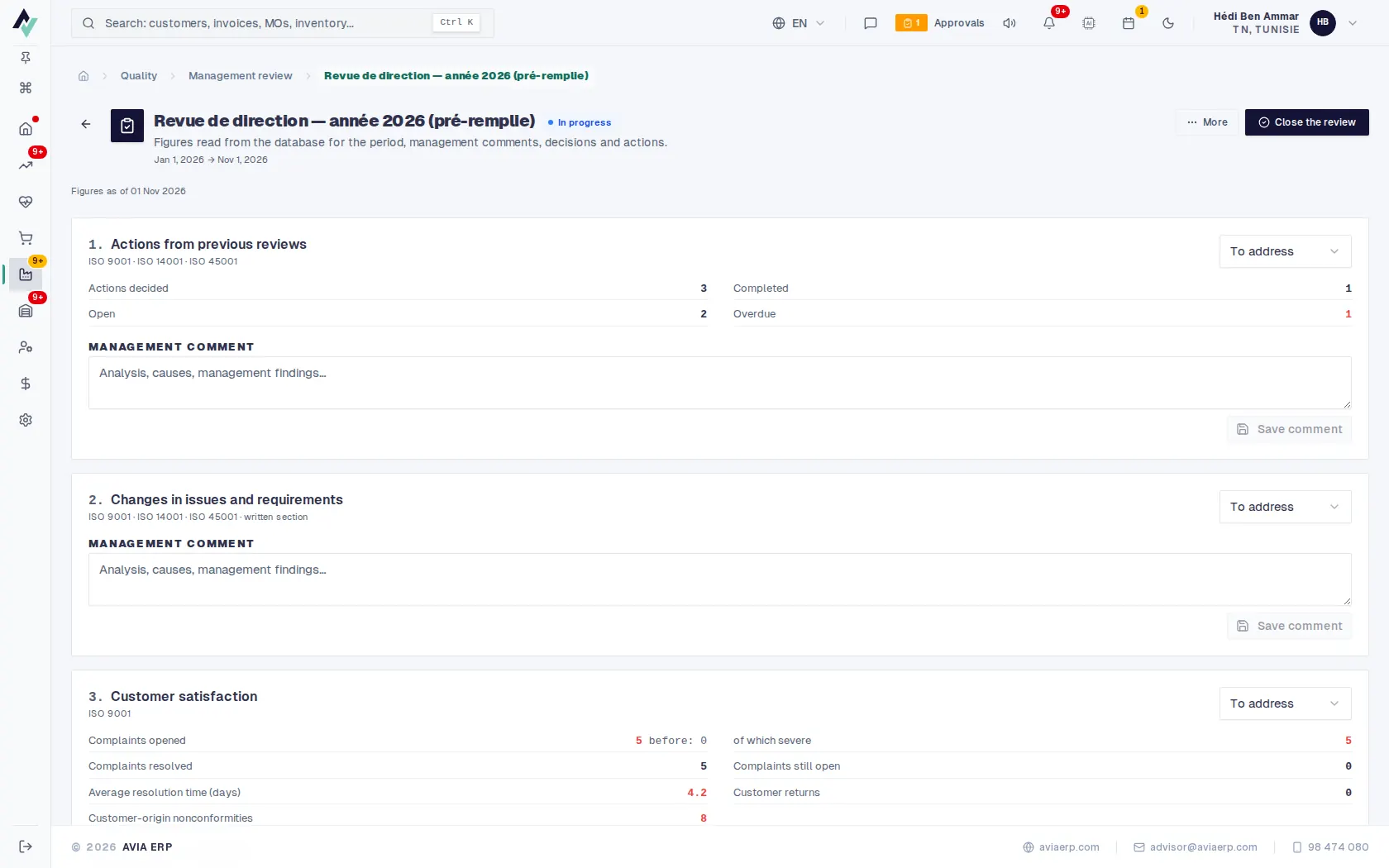
Two portal screens on a fictitious maker of cosmetics and para-pharmacy products: the final inspections before release and the management review.
Portal screenshots on Capbon, a fictitious cosmetics and para-pharmacy company, on a local test bench: the names, batches and figures shown are sample data.
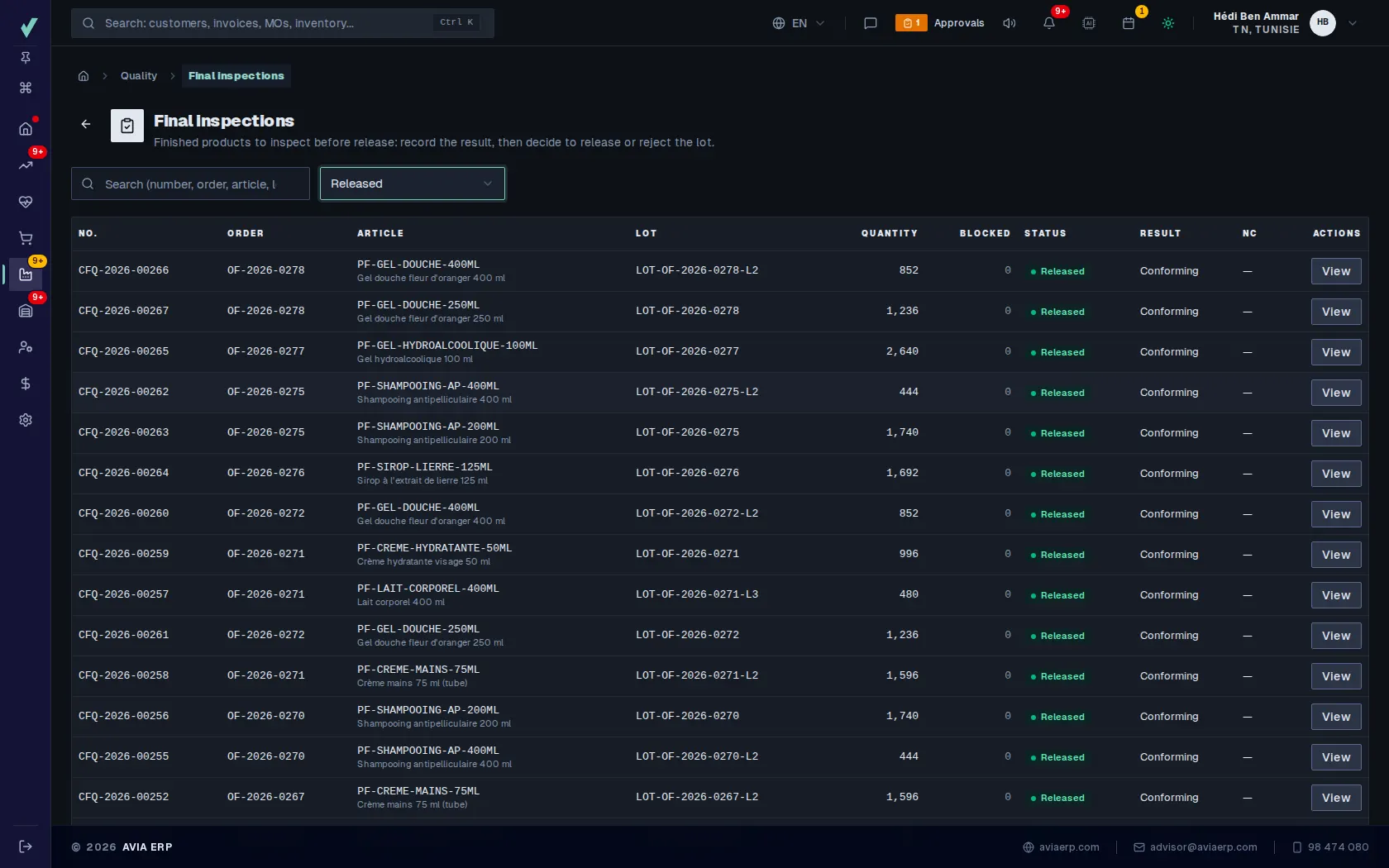
- Quality › Final inspections
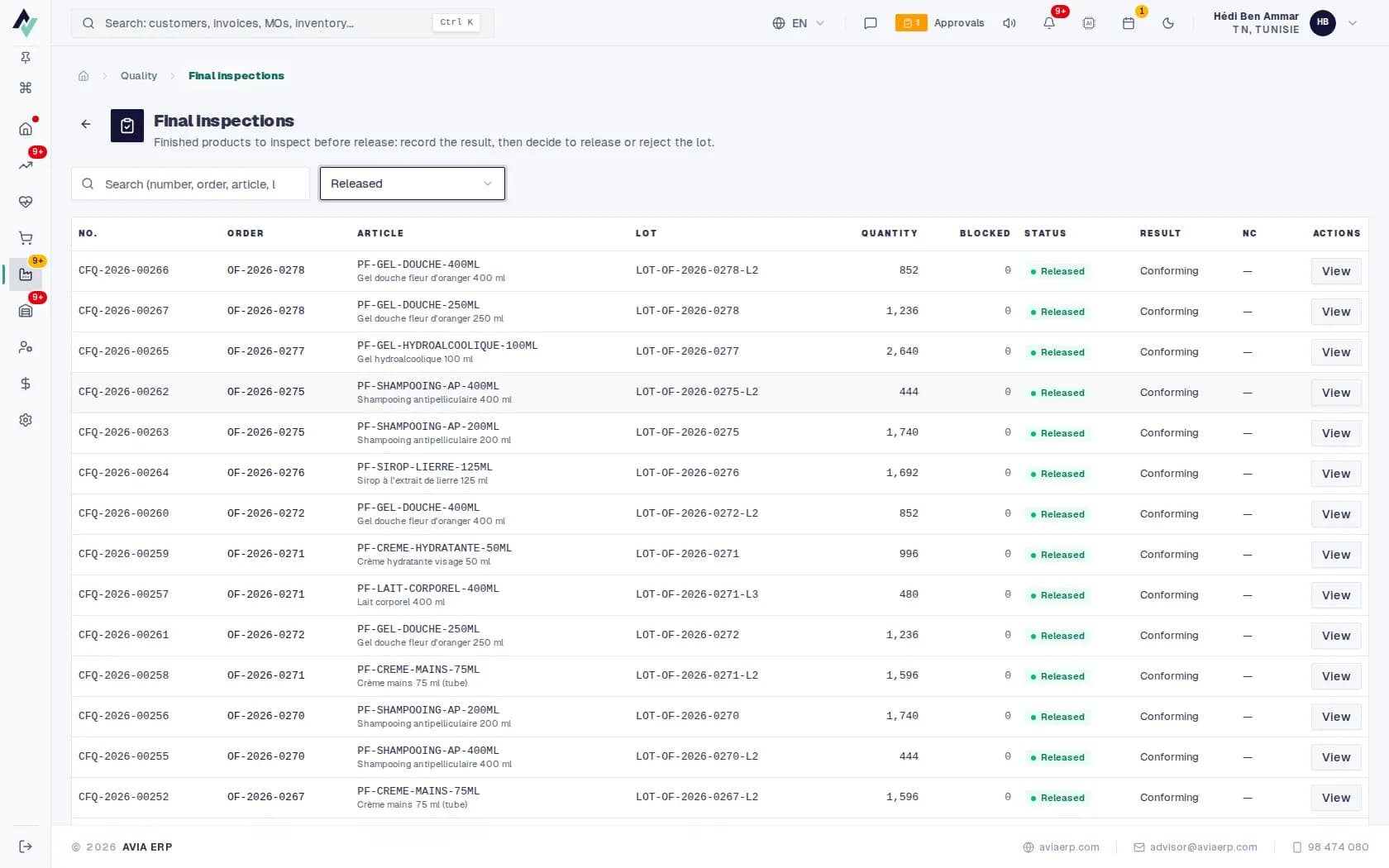
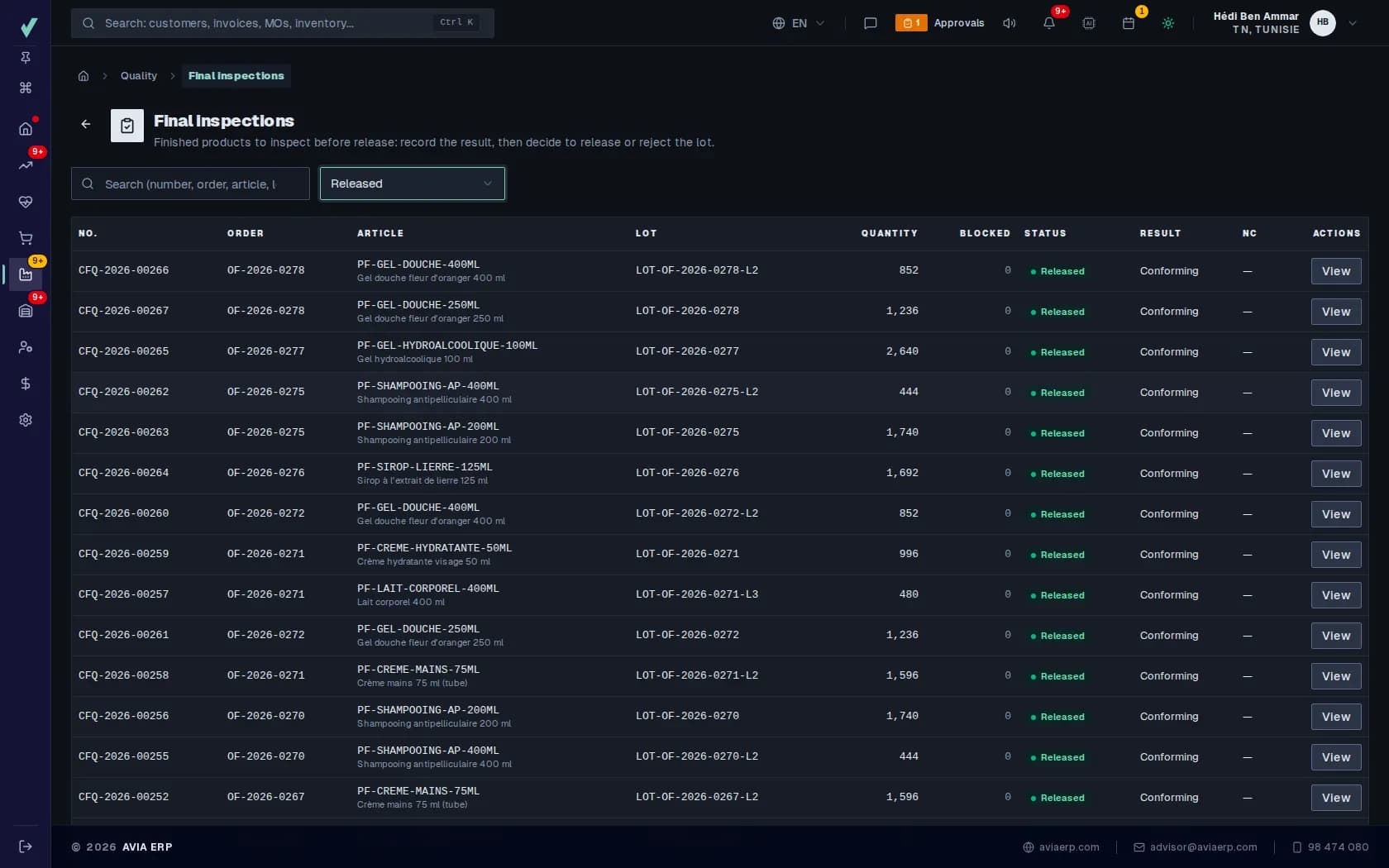
Final inspections: for each finished-product batch, the recorded result and then the decision to release or reject; here the batches already released. - Quality › Management review
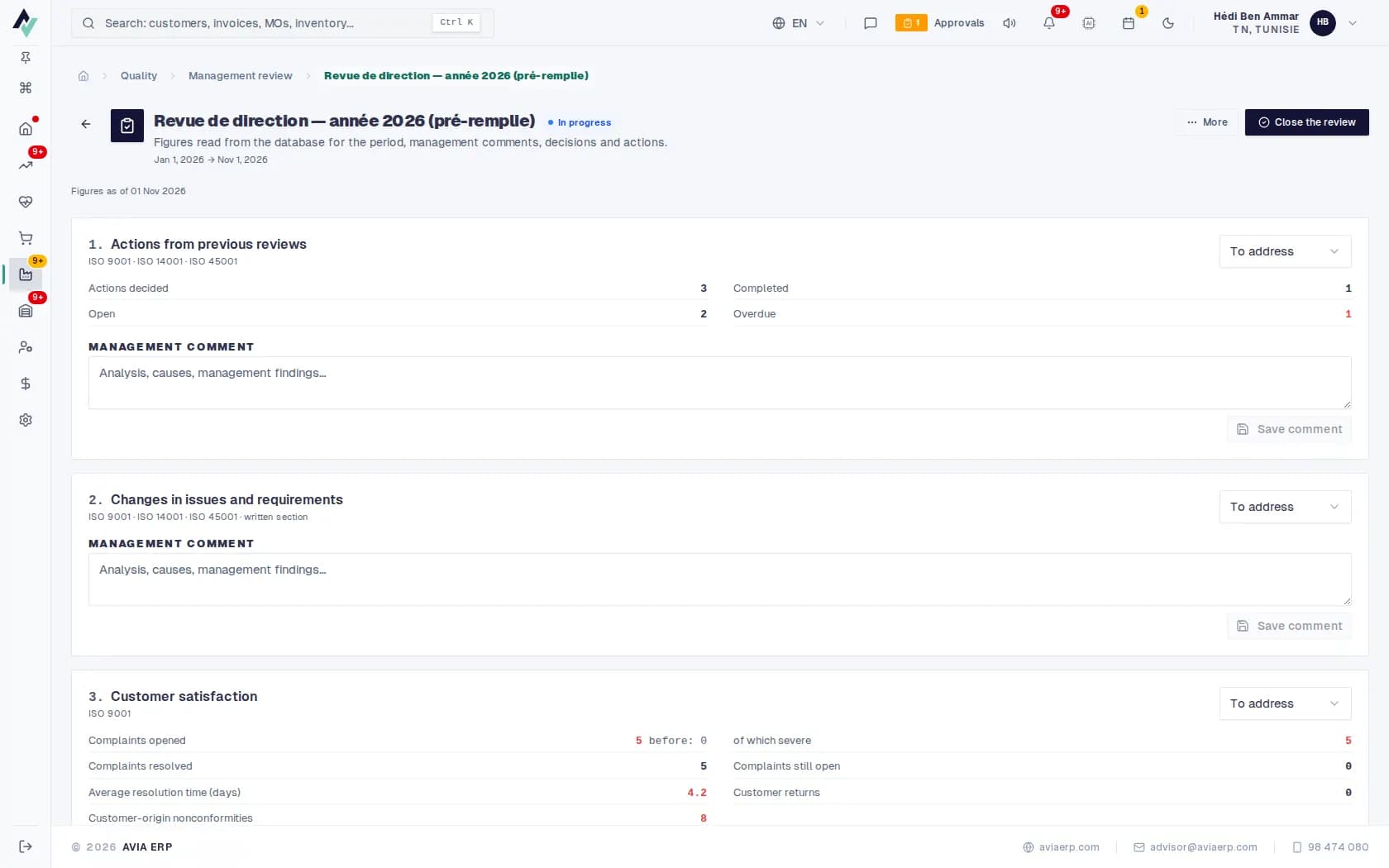
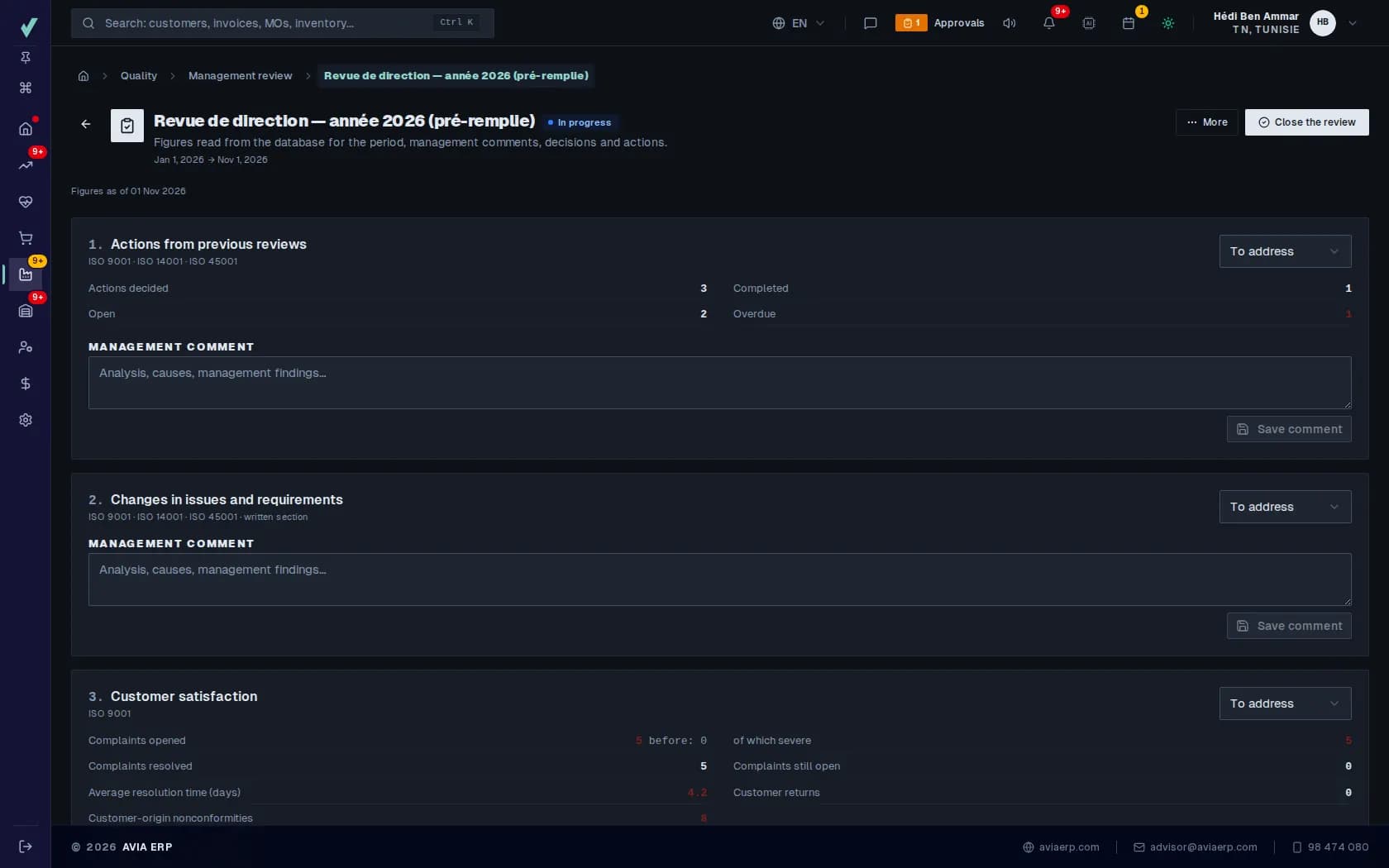
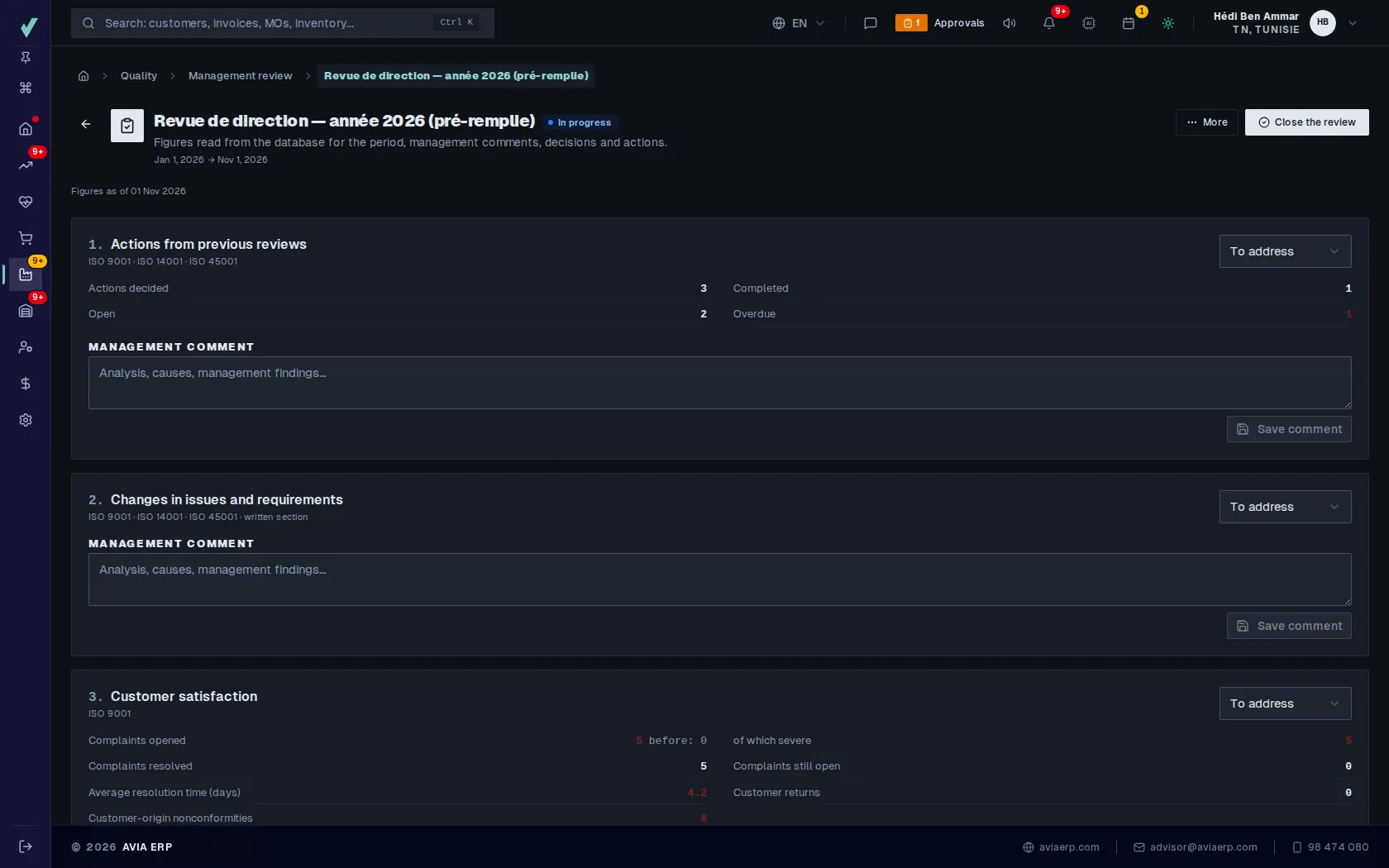
The management review: figures read from the database for the period, management comments, decisions and actions.
What AVIA brings to a GMP site (AVIA is neither certified nor validated)
- Batch traceability and final inspectionTraceability of every batch (receipt, consumption in a manufacturing order, despatch) and the final inspection of the finished product can be consulted in the tool; the complete batch record is not compiled automatically.
- Statuses, blocking and releaseBatches in quarantine, blocked, recalled, rejected or expired cannot leave stock without a reasoned derogation from a quality manager, traced in the audit log; release of the finished product is a reasoned decision, dated and attributed to its author (final inspection required per item or family; holding in Block mode is set company-wide).
- Expiry and FEFOBatches proposed nearest to expiry (FEFO) on issue when none is entered, issue of expired batches blocked; the expiry date is entered on each batch.
- Calibrated instrumentsA register of measuring instruments with calibration history and due dates; an inspection that declares an instrument out of calibration can be refused (enableable rule).
- Audit log and approvalsAn audit log chained by fingerprints, which makes any modification detectable, and step-by-step approval circuits that refuse self-approval.
The direct benefits for your industrial company
Release decided on the evidence
The final inspection and the release decision are recorded with their author and date.
No blocked or expired batch leaves the site
The block is carried by the statuses in the system; a derogation stays reasoned and traced.
Fewer destructions on expiry
AVIA proposes batches in FEFO order on issue, which helps run the batches down in the right order.
An inspection that rests on the system
Batch traceability, non-conformances and release decisions can be consulted in the tool, with nothing to reconstruct.
Get a personalised demonstration of our ERP!
Request your demoThey trust us
Averaland
Cosmetics manufacturing.
The industries AVIA ERP covers
Every industrial sector demands its own rigour. AVIA adapts to your regulatory constraints through focused domain modules.
Industrial diagnostic: forty-five minutes, one real process, a written summary.
Book an industrial diagnostic